Housing Plays an Important Role in Economic Development for Roseville

9 Jul 2026
News
Several factors contribute to economic development and quality of life in Roseville, but housing is one of the most important – and underrated. Housing inventory, choice, and pricing can influence our business community based on the workforce they need, thereby affecting the diversity and availability of job opportunities in Roseville.
“Housing in Roseville needs to be as diverse as our economy,” says Janice Gundlach, Community Development Director for the City of Roseville Economic Development Authority (REDA). “This means finding balance between ownership and rental options, as well as variety in home size, type, and price. This allows rental options that range from affordable to rent-by-choice luxury and ownership options that span first-time through more established households looking to move up.”
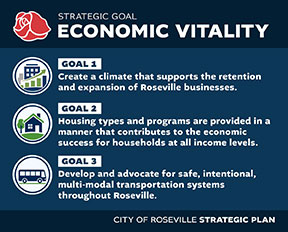
Housing that meets the life-cycle continuum was also identified as a goal of the Economic Vitality strategic priority by the City of Roseville, which was informed by a community aspiration that includes thriving and diverse neighborhoods with quality housing.
A community’s housing ecosystem can affect its overall economy in ways its residents may not expect. This is why it’s important to consider housing in economic development efforts.
Housing Availability Affects Labor Markets
When people discuss housing availability, they often focus on inventory – are enough housing units being built to meet the needs of residents? However, availability also refers to the types of housing being built.
The Family Housing Fund published a report on the Twin Cities in 2019 that examined housing supply and economic growth. The report discussed how lower-income workers (including child care workers, nursing assistants, home health aides, and retail and restaurant workers) can be pushed out of communities when affordable housing is unavailable.
“The landscape has changed since we did that report, but I suspect that many of the themes are still relevant,” says Ellen Sahli, President and CEO of the Family Housing Fund. “This report couldn’t have predicted the pandemic and the known shifts in the labor market since then, but this is the best information we currently have.”
At the most basic level, limited affordable housing inventory could make it harder to hire lower-income workers. These Minnesota residents are going to look for work closer to home, rather than taking on long commutes to work at a restaurant or store. The basic amenities that Roseville residents enjoy, like dining out on a Friday night, could become more cumbersome due to staffing shortages.
Short-Term Housing Trends Can Affect Long-Term Migration
A lack of affordable housing doesn’t just affect low-wage workers; it also impacts younger residents just starting their careers. Cities often want to capture “early formation households,” as Sahli calls them, which occur when young professionals move in together, buy their first homes, and have kids.
Younger households shape communities as couples advance in their careers and increase their incomes. However, if younger Minnesotans can’t find affordable housing in one area, they are more likely to move to another part of the Twin Cities – or leave for surrounding counties.
Spending Habits Also Shift With Housing
It’s easy to get caught up in access to labor when discussing housing options, but residents also bring spending power to the economy. Even though the Family Housing Fund report was published in 2019, it highlights how much the Twin Cities stand to lose from inadequate housing inventory. A few statistics include:
- The region stands to lose $81 million annually between 2018 and 2038 due to unrealized consumer spending from a lack of housing.
- The Minneapolis-St. Paul regional economy could be $4.3 billion larger if it had adequate housing.
- Reduced spending leads to slower economic growth, and the housing shortage could result in 48,344 fewer jobs in the seven-county Twin Cities region in 2038.
These trends occur when people spend their money closer to home after moving away from the Twin Cities. Remote workers also play a role in these spending trends. They are more likely to enjoy lunch or a post-work coffee locally rather than travel into downtown MSP.
In the Long Run, Housing Affects Business Potential
Finally, limited housing can seep into business attraction and retention efforts in economic development. This occurs at all levels of business creation:
- Communities can miss out on entrepreneurs opening home-based businesses before expanding into storefronts, co-working spaces, and offices.
- Small business expansion can be limited if communities aren’t viewed as growing or desirable – this means new franchises or B2C (business-to-consumer) locations could be opened in higher-potential areas.
- Enterprises could also seek newer areas to relocate or expand, causing communities with inadequate housing to also miss out on job creation.
One entrepreneur might not have a major impact on a city’s economy, but the ripple effects across the economy could cause communities to miss out on jobs and opportunities for residents.
REDA Works to Support Housing Across Roseville
REDA is aware of the potential impacts of an ineffective housing ecosystem and shares resources to meet the housing needs of current and future families. REDA is actively involved in housing discussions while tracking insights, such as the Family Housing Fund report. REDA will continue to explore solutions for residents and to create a healthy, growing economy for the community, allowing Roseville to reach its full potential. Contact our team to discuss housing further.
More Topics